Garden Maintenance Abbey Wood — Recycling and Sustainability
 Garden Maintenance Abbey Wood is committed to an eco-friendly waste disposal area and a practical, long-term approach to a sustainable rubbish gardening area. Our plan blends on-site green waste handling, careful material separation and community partnerships to lower landfill contribution and create healthy local soils. This page outlines targets, operational practices, local logistics and the ways we work with residents and community groups to keep Abbey Wood greener.
Our sustainability priorities
We measure progress by diversion rates, carbon reductions and community engagement. Key priorities are: reusing materials, expanding composting, and ensuring that bulky green waste and garden rubbish are processed through approved, low-impact routes. Below are everyday steps our team takes to maintain an eco-friendly waste disposal area while delivering excellent garden care:
- Segregation at source — separating garden vegetation, soil, plastics and inert materials on site;
- Designated recycling zones on larger jobs for timber, metal and pots;
- On-site composting and chipping where practical to create mulch and soil conditioner.
Local context and borough waste separation
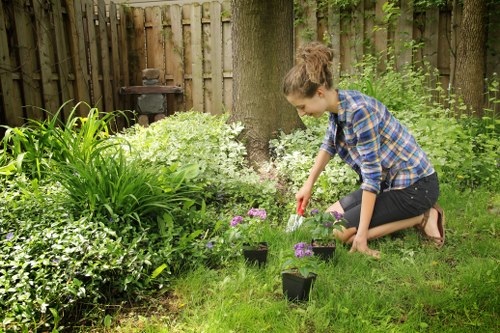 The local borough approach to waste separation influences our processes. Abbey Wood lies within a network of southeast London boroughs that typically operate separate streams for food/organic waste, garden waste (brown/green bins) and dry recycling (paper, glass, cans, plastics). By aligning our sorting practices with the boroughs' kerbside rules, we ensure collected recyclable materials are matched to the correct municipal routes and avoid cross-contamination.
Our operational targets are clear: we aim for a recycling percentage target of 70% by 2028 across garden-maintenance materials (including woody waste, soil reuse, and recyclable packaging), with interim milestones of 55% by 2025. These targets cover both small residential jobs and larger grounds maintenance contracts. Hitting them requires rigorous on-site separation, reliable transfer partners and investments in low-carbon logistics.
 We operate a mixed fleet of low-emission vehicles to reduce transport carbon. Low-carbon vans include fully electric vans for shorter urban runs and plug-in hybrids for heavier loads. Vehicles are charged using renewable-backed electricity where possible, and route planning software optimises journeys to reduce idling and mileage. The combination of greener vehicles and smarter scheduling reduces emissions associated with transporting garden waste to authorised facilities.
To move materials responsibly we use nearby civic and municipal transfer points rather than general landfill: local transfer stations and civic amenity sites serve Abbey Wood and surrounding boroughs. These sites accept separated green waste, clean soil, timber and recyclable containers, ensuring materials enter the correct processing streams — composting facilities, shredders for wood-chipping, and materials recycling facilities (MRFs) for dry recycling.
Local transfer stations and responsible routing
 Where possible we prioritise transfer stations and processing centres that are certified for environmental compliance and operate with low-emission handling equipment. Using designated transfer stations shortens the supply chain between your garden and the processor, which lowers our fleet's overall mileage and keeps the local recycling chain efficient. We also track movement of larger volumes to ensure transparency in where materials are processed.
Partnerships with charities and community reuse
We partner with local charities and community groups to give unwanted but reusable items a second life. Items such as good-condition furniture, garden ornaments, planters and potted plants are offered to registered charities, community gardens and social enterprises rather than being sent for disposal. These partnerships support local social value and reduce the need for manufacturing replacements.
Examples of charity collaboration include donation pathways for salvageable timber and reclaimed bricks that can be used in community projects, and plant donations to communal allotments and school gardens. By channelling usable items to charity partners we support a circular approach to garden maintenance in Abbey Wood.
Creating a true sustainable rubbish gardening area also means changing how we handle organic waste on site. We promote low-tech and small-scale mechanical composting, wood-chipping for mulches, and reusing composted material to improve soil health. These practices reduce the need for chemical inputs and decrease the volume of material entering municipal waste streams.
Our teams are trained in material classification to match borough recycling streams: dry recyclables separated from organic materials, soils managed for reuse or disposal at licensed inert facilities, and contaminated loads identified for remediation. Clear labelling, temporary on-site containers and job-specific waste plans all help maintain high recycling performance.
 In summary, Garden Maintenance Abbey Wood is focused on creating an effective, low-carbon and community-minded approach to garden waste. Our combination of a 70% recycling target, partnerships with local transfer stations and charities, and investment in low-carbon vans provides a practical blueprint for sustainable garden care. By integrating borough-level waste separation practices and prioritising reuse and composting, we deliver a greener gardening service that benefits both residents and the wider Abbey Wood environment.